
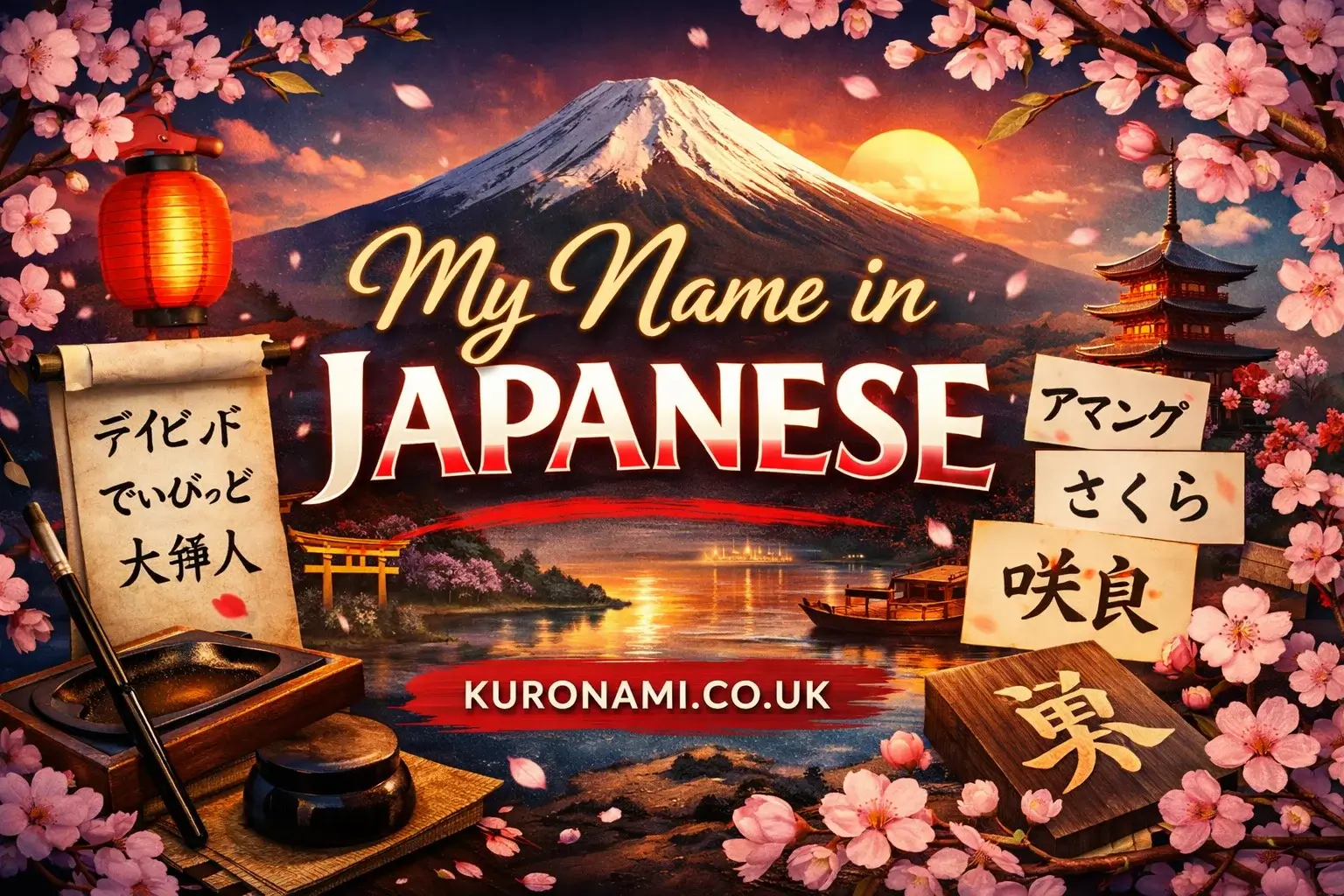
Have you ever thought about how my name in Japanese would look in Katakana, Hiragana, or even Kanji? If you are learning Japanese, planning a tattoo, creating custom jewelry, or simply curious, seeing your name written in Japanese script feels personal and exciting. With the right system, your name can be converted accurately without losing its original pronunciation.
You do not need to know how to use a Japanese name translator to get started. Just type your name, and the converter will instantly generate the correct Japanese script based on phonetic transcription. If it is a common name like David or Emma, or something unique, you can quickly discover how your name appears in authentic Japanese writing.
Japanese name converter helps you write your name in Japanese within seconds. Simply enter your English first or last name and see it transformed into Katakana, Hiragana, or possible Kanji options. The tool follows Japanese pronunciation rules to ensure your name sounds natural and readable.
How to Convert My Name in Japanese?
Writing my name in Japanese depends on pronunciation rather than direct translation. Japanese does not usually translate foreign names by meaning, butinstead converts them based on sound. This process is called phonetic transcription, and it ensures your name is easy for Japanese speakers to read and pronounce.
In most cases, a Japanese name converter will write your name in Katakana, but it can also appear in Hiragana or Kanji depending on style and preference. Each writing system has a different purpose and visual feel. Understanding these differences helps you choose the version that fits your goal.
My Name in Katakana
Katakana is the most common way to write foreign names in Japanese. It is a phonetic script used specifically for non Japanese words, international names, and borrowed terms. If you are converting an English name into Japanese, Katakana is almost always the correct choice.
For example, the name David becomes デイビッド, and Emma becomes エマ. Katakana keeps the pronunciation close to the original while adapting it to Japanese sound patterns. This makes it clear, modern, and easy to read.
Foreign names use the katakana name converter because it signals that the word comes from outside Japan. It helps readers instantly recognize that the name is international. This system keeps pronunciation consistent and avoids confusion with traditional Japanese names written in Kanji.
Katakana Examples of Popular Names
- Michael → マイケル
- Isabella → イザベラ
- John → ジョン
- Amanda → アマンダ
- Smith → スミス
These examples show how English sounds are adjusted to match my name in Japanese syllables.
My Name in Hiragana
Hiragana is another Japanese phonetic script, but it is softer and more traditional in appearance. While it is not commonly used for foreign names, some people choose Hiragana for aesthetic reasons. It creates a gentle and flowing look.
For example, Emma in Hiragana would be written as えま. Although correct in sound, Katakana is still the standard for international names. Hiragana is more often used for native Japanese words and given names.
Hiragana may be used when someone wants a softer or more artistic style. My name in Japanese can appear in creative writing, calligraphy, or personal branding. However, it is less formal for foreign names compared to Katakana.
Hiragana gives names a delicate and classic feel. It is often associated with femininity, warmth, and simplicity. If style matters more than convention, Hiragana can be a beautiful option.
My Name in Kanji
Kanji adds meaning to a name rather than just sound. Each Kanji character carries its own definition, such as strength, beauty, light, or harmony. Because of this, writing a foreign name in Kanji requires creativity and careful selection.
Foreign names can be written in Kanji, but the process is not automatic. Because Kanji represents both sound and meaning, characters must be carefully selected to approximate the pronunciation while forming a meaningful combination. This approach is a personalized adaptation rather than a direct translation.
Many people choose Kanji based on the qualities or symbolism they want their name to express. For instance, someone named Grace might select characters associated with elegance, beauty, or blessing. The ideal Kanji choice balances phonetic similarity with positive meaning, creating a name that feels both authentic and significant.
Example Kanji Name Adaptations
- Anna → 安奈 (peaceful, elegant)
- Leo → 礼央 (respect, center)
- Sara → 咲良 (blossom, good)
Kanji versions are creative interpretations rather than strict translations. They add symbolic depth and personal meaning to your Japanese name.
Is It a Translation or a Transcription?
When converting my name in Japanese, the process is usually a transcription rather than a translation. Translation changes the meaning of a word, while transcription keeps the original sound and adapts it to Japanese phonetics. Because most English names do not have direct Japanese equivalents, they are written based on pronunciation instead of meaning.
My name in Japanese follows a syllable based sound system, which means certain consonant clusters are adjusted to fit natural speech patterns. This is why names like “Smith” become スミス and “David” becomes デイビッド. The goal is to make the name readable and pronounceable for Japanese speakers while preserving its original identity.
English First Names in Japanese
English first names are typically written in Katakana, the script used for foreign words and names. This ensures clarity and helps Japanese readers immediately recognize the name as international. The conversion focuses on sound accuracy rather than literal meaning.
Each name is adapted to match Japanese syllables, often adding vowels where needed to maintain smooth pronunciation. Below are examples of popular English first names converted into Japanese script.
| English Name | Katakana | Pronunciation |
| Isabella | イザベラ | Ee-za-be-ra |
| David | デイビッド | Day-bi-ddo |
| John | ジョン | Jo-n |
| Mary | メアリー | Meh-a-ree |
| Emma | エマ | Eh-ma |
| Michael | マイケル | Ma-ee-ke-ru |
| Amanda | アマンダ | A-man-da |
| Addison | アディソン | A-di-son |
| Lee | リー | Ree |
| Takumi | タクミ | Ta-ku-mi |
English Last Names in Japanese
English last names are also converted using phonetic transcription rules. Katakana is used to represent foreign surnames clearly and consistently in Japanese writing. This method keeps pronunciation close to the original while adjusting to Japanese sound structure.
Because my name in Japanese does not allow certain consonant endings or clusters, vowels are often inserted to maintain flow. Below are examples of common English surnames written in Japanese.
| English Last Name | Katakana | Pronunciation |
| Smith | スミス | Su-mi-su |
| Williams | ウィリアムズ | Wi-ri-a-mu-zu |
| Johnson | ジョンソン | Jon-son |
| Brown | ブラウン | Bu-ra-un |
| Feinstein | ファインスタイン | Fa-in-su-ta-in |
| Emmanuel | エマニュエル | E-ma-nyu-e-ru |
| Dalrymple | ダルリンプル | Da-ru-rin-pu-ru |
| Janda | ジャンダ | Jan-da |
| Bieber | ビーバー | Bee-ba |
| Hsu | シュー | Shu |
Why Put Your Name in Japanese?
Writing my name in Japanese is a meaningful way to connect with the language and culture. Whether you are studying Japanese, traveling, or simply interested in anime and Japanese media, seeing your name in Katakana, Hiragana, or Kanji makes the experience more personal. It helps you understand pronunciation patterns and how the Japanese writing system works.
Many people also use their Japanese name for tattoos, calligraphy art, custom jewelry, social media usernames, or personalized gifts. Having your name written correctly adds authenticity and avoids common spelling mistakes. It can also be a fun way to introduce yourself in Japanese conversations or classrooms. It creates a unique identity that reflects your appreciation for Japanese culture.
How Accurate Is the Japanese Name Converter?
My name in Japanese converter is highly accurate when it comes to phonetic transcription. It follows Japanese pronunciation rules to convert English sounds into Katakana, ensuring the name can be read naturally by Japanese speakers. Since Japanese uses a syllable based system, certain sounds are adjusted to fit standard patterns.
However, automatic tools focus on sound rather than meaning. If you choose a Kanji version, additional customization may be needed to select characters that balance pronunciation and symbolism. For everyday use, Katakana results from a reliable converter are typically correct and widely accepted. Still, reviewing the final result can help ensure it matches your intended pronunciation perfectly.
Most Popular Names in Japan Today
Popular names in Japan today reflect modern trends while preserving traditional meaning. Many parents choose names that are easy to pronounce, visually balanced in Kanji, and rich in positive symbolism. Themes like light, nature, beauty, and harmony remain especially popular.
Short names with clear vowel sounds have become increasingly common in recent years. Parents often select Kanji that represent hope, brightness, or seasonal beauty. This balance of simplicity and depth makes modern Japanese names both meaningful and stylish.
At the same time, global influence has shaped naming choices, with some families preferring names that are easy to pronounce internationally. Even with modern trends, cultural roots and symbolic meaning continue to play a central role in name selection.
Most Common Japanese Surnames
The most common Japanese surnames are closely tied to geography and historical settlement patterns. Many include Kanji such as 田 meaning rice field, 山 meaning mountain, and 川 meaning river. These elements reflect Japan’s agricultural heritage and connection to the land.
Names like Sato, Suzuki, and Takahashi are shared by millions of people across the country. Their popularity dates back centuries, often linked to regional clans or land ownership. Despite Japan having thousands of unique surnames, a small group dominates the population.
These common surnames remain widely recognized both within Japan and internationally. Migration, media, and global culture have made them familiar around the world. Understanding their meanings offers insight into Japanese history, identity, and family lineage.
Frequently Asked Questions-FAQs
How do I write my name in Japanese?
You write my name in Japanese by converting it based on pronunciation rather than meaning. Most foreign names are written in Katakana, which is used for international words and names. Simply enter your name into a reliable converter to see the correct phonetic version.
Can any name be converted into Japanese?
Yes, almost any name can be converted using phonetic transcription. Japanese adapts foreign sounds into its syllable based system by adding vowels where needed. While the spelling may change slightly, the pronunciation remains close to the original.
How do I know if my Japanese name is correct?
A correct version should follow standard Japanese sound patterns and be easy for native speakers to read. Katakana conversions are typically accurate if generated using proper phonetic rules. You can also confirm accuracy by checking with a Japanese speaker or language expert.
Can I choose my own Kanji characters?
Yes, you can select Kanji that match your name’s pronunciation and preferred meaning. However, this requires careful choice because Kanji carry specific definitions and cultural nuances. Many people choose characters that represent positive traits such as strength, beauty, or harmony.
Is Katakana the correct script for foreign names?
Yes, Katakana is the standard script used for foreign names in Japan. It clearly signals that the name comes from outside the Japanese language. This makes it the most appropriate and widely accepted option.
Can Japanese people read my converted name easily?
If your name is written in proper Katakana, Japanese readers can usually pronounce it without difficulty. The syllable structure ensures clarity and natural pronunciation. Some complex sounds may be slightly adjusted, but the name will remain recognizable.
Conclusion
Writing my name in Japanese is a simple yet meaningful way to connect with the language and its writing systems. Whether shown in Katakana, Hiragana, or adapted into Kanji, your name takes on a new cultural form while preserving its original sound. This process helps you better understand Japanese pronunciation and script structure.
A reliable name converter makes the process quick and accessible for everyone. By following phonetic rules, it ensures your name can be read naturally by Japanese speakers. While Katakana is the most accurate choice for foreign names, Kanji options can add deeper symbolic meaning when chosen carefully.
Exploring my name in Japanese is both educational and personal. It can be used for travel, language learning, art, social media, or simply out of curiosity. No matter your reason, seeing your name written in Japanese creates a unique and memorable cultural experience. Find inspiration and expert knowledge inside our growing resource hub at KURONAMI.

